

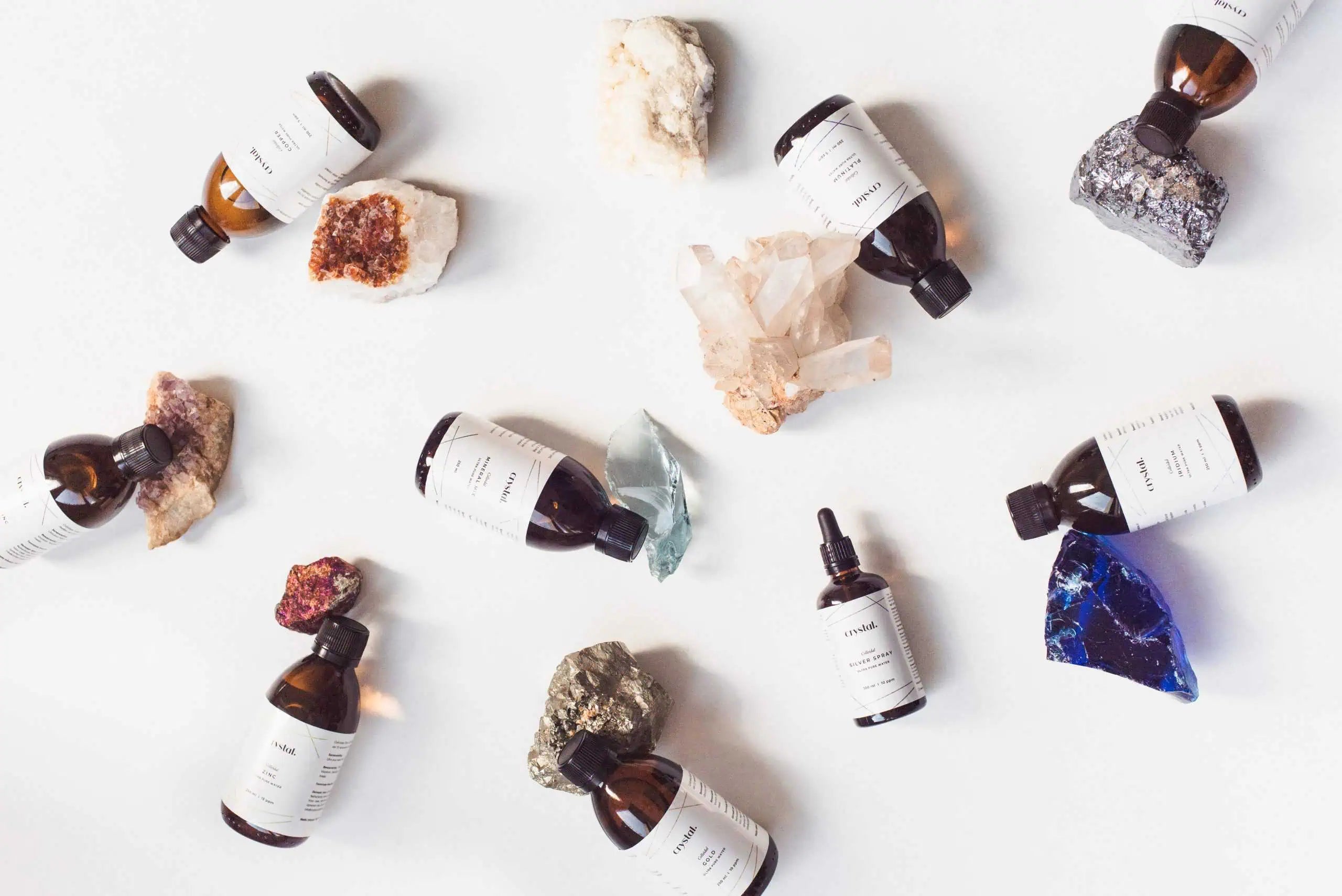
I see, I see what you don't see, and it is.... shiny, gleaming, strong, and multifunctional. No, I'm not talking about gold or silver. I'm talking about the underdog of precious metals - perhaps less applauded and appreciated, but still one of the first used by mankind. A metal found everywhere: in history and in legends. In medicine, technology, and supernatural rituals. In objects, in your bloodstream, and in our webshop. This is the extraordinary story of copper.
Copper in history
As far back as we can look in history, copper was used in the Stone Age to make objects such as tools, weapons, and jewelry. The Stone Age is around 6,000 to 2,000 years before Christ. The oldest copper ornament found in archaeology, in northern Iraq, dates back to 8700 BC.
In one of the ancient Egyptian writings from 2400 BC, copper is first mentioned as a means of disinfecting wounds or drinking water. Therefore, copper was also used to make the very first surgical instruments. Copper was also a popular medicine with the ancient Greeks. Around 400 BC, Hippocrates - who also explained the medical uses of silver - described how copper was applied in medicine, for example, to treat ulcers on the leg.
Copper in science
So it was not long before our ancestors realized that the metal we made tools from could also be used as a medicine. Copper was officially granted the coveted title of 'pharmaceutical drug' by the Roman medical writer Aulus Cornelius Celsus. This is now almost 2000 years ago.
Today, copper is mainly used as an antimicrobial agent on hospital surfaces. Think of door handles, emergency buttons for nurses, or the railings of hospital beds. This reduces the chance of patients catching infections in hospitals.
Together with iron, copper is an essential mineral for the body. If you take a look inside your own body, you will find copper mainly in your liver, brain, heart, kidneys, and skeletal muscle. They form red blood cells and thus play a major role not only in oxygen transport in your body, but also in energy production. Copper also ensures healthy bones, a strong immune system, and a well-functioning nervous system.

So it was not long before our ancestors realized that the metal we made tools from could also be used as a medicine. Copper was officially granted the coveted title of 'pharmaceutical drug' by the Roman medical writer Aulus Cornelius Celsus. This is now almost 2000 years ago.
Today, copper is mainly used as an antimicrobial agent on hospital surfaces. Think of door handles, emergency buttons for nurses, or the railings of hospital beds. This reduces the chance of patients catching infections in hospitals.
Together with iron, copper is an essential mineral for the body. If you take a look inside your own body, you will find copper mainly in your liver, brain, heart, kidneys, and skeletal muscle. They form red blood cells and thus play a major role not only in oxygen transport in your body, but also in energy production. Copper also ensures healthy bones, a strong immune system, and a well-functioning nervous system.
Copper in legends
The fact that copper is a much-loved metal is also reflected in spiritual legends and Greek mythologies. For example, each of the seven heavenly bodies of the Greeks was associated with the seven metals known in antiquity. Copper was assigned to Venus, the planet symbolizing Aphrodite, the Goddess of Love. This legend is probably also rooted in the soil of the island of Cyprus. Not only are the remains of many ancient copper mines found here, but this was also the island where Aphrodite first set foot, having been born from the foam of the sea.
If you walk into a New Age shop, you will find copper on the shelves as a tool to use in your rituals. The story goes that this precious metal not only strengthens your connection with your self-awareness, but also with the earth and others around you. It is said to help you with psychic communication, or with experiencing love, beauty, and harmony more strongly. For example, New Age followers wear copper with stones and crystals to reinforce its effect.
Copper in distilled water
You see, we at Crystal Colloidals could not ignore copper! Colloidal copper consists of pure water in which tiny electrically charged copper particles float. These particles are not only too small to be seen with the naked eye, but also too small to be stored by the body. So when the copper has done its hard work, it will leave the body again.
The copper particles have a size of twenty nanometres, and the water has a concentration of five ppm: 'parts per million'. A powerful balance between the water and the copper particles, with high quality and purity. The product is therefore clear, with a pure light-greenish yellow color that you can see through.
Are you looking for a natural way to give your body a helping hand? Zinc is essential for good health and is a metal already found in your body. Want to know more about colloidal zinc? Then read on.

What is colloidal zinc?
According to the Western world, zinc was discovered in 1764 by the German Andreas Sigismund Marggraf. Yet this is not entirely true. Zinc alloys have been used for centuries. In Palestine and former Transylvania, objects have even been discovered containing 87% zinc. These date from 1400 BC. In the 14th century, Hindus could already distinguish zinc from other known metals. However, it was not until the 18the It was not until the 18th century that Europeans learned to make zinc themselves, and in 1934, the effects of zinc were investigated more closely. Gabriel Bertrand showed that zinc was an essential trace element for animal growth, and not long after, connections were made to the human body.
Zinc is a trace element of many enzymes in the body. The body uses the metal, among other things, to build proteins, support a healthy immune system, and promote tissue growth and development. Zinc can be found in almost every cell, but it has to be 'replenished'. It is therefore important to get enough zinc. Fortunately, you can easily integrate it into your diet. Foods rich in zinc include oysters, shellfish, legumes, seeds, and nuts. You can also take zinc supplements.
Composition
When you choose colloidal zinc from Crystal, you choose quality. The colloidal zinc has a concentration of 15ppm, which means that per liter, you will find 15 milligrams of zinc. It is often said that a high ppm indicates the quality of colloidal zinc. However, this is meaningless without a particle size. With Crystal, this is 20 nanometres. This is an important factor in the water's ultimate quality. The smaller the zinc particle, the greater the number of particles in the product, and the more effective it will ultimately be. You can also tell whether the zinc is of good quality by its color and substance. Because Crystal only chooses the best quality, the colloidal zinc is clear and colorless.
An allergy to zinc is very rare. Nevertheless, it does occur occasionally. Do you want to check whether you have a zinc allergy? Fortunately, there is an easy way to do this. Put a few drops on the back of your hand and see if you have an allergic reaction within half an hour. No reaction? Then you can just take it safely.

Iridium may not ring a bell with you. Yet this chemical element was discovered by an English chemist as early as 1803 and has many applications. Would you like to know exactly what iridium is? And what is Crystal Colloidal Iridium made of? You can read it in this blog.
What is colloidal iridium?
Iridium is a chemical element and is silver-white in color. The precious metal was discovered in 1803 by the English chemist Smithson Tennant, but has of course existed for much longer. For example, a meteorite hit Mexico 65 million years ago. This meteorite contained a high concentration of iridium. This also occurs on our own Earth. Iridium can be found in the Earth's crust in its unbound state. It can often be found in combination with other platinum metals. In our current society, iridium is mainly used in alloys where material hardness is extremely important. Examples of iridium use include the tip of a fountain pen, a compass needle, and, in the past, even weapons.
Because of the various applications, you might not immediately expect that iridium can be taken in colloidal form. Yet the use of this precious metal has a positive effect. It is said that iridium provides balance and has a harmonizing effect on the body and mind.
Colloidal iridium from Crystal Colloidal
Colloidal iridium from Crystal is very powerful and has an effective working surface area of 0.1m2/L. This is also the most important indicator of the quality of colloidal iridium. The better the specifications, the larger the effective working surface and the more effective the final product will be. If the colloidal iridium is of high quality, the liquid will have a light blue and sometimes silver colour. Is your product the same colour as water? Then the product is of poor quality and does not contain any iridium particles.
The use of colloidal iridium is not recommended for people with an iridium allergy. This is an extremely rare allergy. Are you not sure whether you have an iridium allergy? And would you like to check before using it? Drip a few drops of the colloidal iridium on the back of your hand. Is there still no reaction after 30 minutes? Then you can be almost certain that you are not allergic.

When the clock strikes one hour back, we all know what time it is... Time to fill the pantry with hot chocolate and mini-marshmellows, pull out the woolen onesies, and start making a Spotify playlist of melancholic tunes. Because we all experience it: the winter blues. The inability to get out of your warm bed in the pitch dark. No energy to scratch your car windows. Accidentally scolding your colleague, who can't help it if you have to catch that last ray of daylight from behind your office window. And then, as the icing on the cake, a good pair of red, itchy, swollen chilblains. How do we arm ourselves against this? With the right minerals and vitamins!
What is a winter dip?
The winter blues are well known to most Dutch people. For some 450,000 people, this dip even grows into a true depression. Symptoms include fatigue, gloominess, and an unhealthy relationship with one's bed. The causes seem obvious: the sun rises late and sets early, so - especially with the eight-hour working day - we see very little daylight. The grey sky takes the color out of the world, and the trees look like scorched toothpicks. Doesn't sound very utopian, and we still have about five months to live it up.
But there is also a scientific way to understand why we suffer from winter blues. At night, the pineal gland in your brain produces melatonin, a sleep hormone. When it gets light in the morning, your brain receives a signal that it's time to get up - and your pineal gland gets a good break. In the winter, we get up in the dark, and in the absence of daylight, the pineal gland continues to produce melatonin. Not only does this make you sleepy during the day, but it also reduces the production of serotonin - the well-known hormone of happiness. This is normally responsible for self-confidence, sex, or appetite. Not to mention the lack of Vitamin D, which the sun normally provides.
Fortunately, we can fight the winter blues with more than Mariah Carey, blankets, and mulled wine. The ammunition? Try adding these four minerals and vitamins to your day!
#1 Magnesium for more energy
Magnesium is a mineral that is, among other things, responsible for the energy flow in our body. The mineral produces and transports energy, and ensures that your body gets the most out of it. Just think of the process of converting nutrients into energy! Magnesium is not produced by the body itself. Therefore, we depend on food to provide us with this essential mineral. Magnesium can be found in grain and dairy products, vegetables, nuts, and meat, among other things. Does this sound familiar? Ever heard of the 'Schijf van Vijf'?
Fortunately, a magnesium deficiency is not common, but it is still wise to watch where you get your food. Nowadays, much of agriculture relies on artificial fertilizers, which often lack minerals and vitamins. As a result, plant products absorb less magnesium from the soil. The more natural and organic, the better!
#2 Colloidal silver or zinc for a stronger immune system
As if that winter dip weren't bad enough, the flu, colds, and COVID are also lurking. So your immune system could use a boost! Silver and zinc are minerals that can help. Colloidal silver water, for example, fights harmful bacteria, and zinc helps build proteins and develop tissue.
Food is a good - and tasty - way to get zinc. The mineral is mainly found in seafood, shellfish, and fish. So go ahead and lick your oysters! But a bowl of lentil soup or oatmeal can also help you get a good dose of zinc - and a warm tummy!
You can also consult Crystal Colloidal Zinc or Silver Water. Good to know: the smaller the zinc particle, the greater the number of particles in the product and the more effective it is in the end. You can also tell whether the zinc is of good quality by its color and substance. Because Crystal only chooses the best quality, the colloidal zinc is clear and colorless.
#3 Vitamin D for more strength
Vitamin D is produced by the body when the skin comes into contact with the sun. Together with calcium, it helps build strong bones and speeds muscle recovery. And a lack of vitamin D? That can lead to reduced production of serotonin (remember that happy hormone?).
Despite what some people think - or hope - the sunbed will not help you get vitamin D. Fortunately, you can buy vitamin D supplements at the chemist's or add fatty fish, egg yolks, mushrooms, or butter to your daily menu.
#4 Colloidal gold against mood swings
Besides colloidal silver, we also produce colloidal gold. A precious metal with a rich history as old as the Earth. There are many theories about the effects of gold. One of them is that gold has a calming and harmonizing effect. Many ancient civilizations used gold to bring body, mind, and soul into better balance. And a better balance provides more energy, focus, and a higher libido. Give us gold any season!


