

Acne, which can leave an unsightly appearance, is one of the most common skin conditions worldwide, affecting up to 85% of young adults. However, this widespread problem does not start on the skin. In this article, we explore the importance of restoring the skin's microbiome and how colloidal silver and zinc can help those with acne.
Skin inflammation can affect men and women of all ages due to various factors, including puberty, menopause, high stress, pregnancy, aging, disease, diet, pollution, and cosmetics. Moreover, the problem has increased significantly since the advent of COVID and the use of masks. The journey to clear, healthy skin with a robust microbiome can be tricky. With thousands of products on the market, it can be even more confusing. These include strong active ingredients, dermatological treatments, and prescription medications that may target specific types of acne, such as hormonal or cystic acne. Traditional acne treatments such as salicylic acid, niacinamide, or benzoyl peroxide have been shown to be effective. Yet they can lead to unwanted effects such as redness, dryness, and irritation.
Finding a product that works without damaging the skin barrier and microbiome is a balancing act. Consequently, these harsh ingredients can weaken your skin's defenses against bacteria and other pathogens, leading to more breakouts before you see results.
This is where colloidal silver and zinc can be the key to brighter, healthier skin.
The Skin Biome: Repairing and Healing
Our skin is the ultimate barrier between our body and the environment. It is a clever, protective shield containing billions of microorganisms. Despite the stress it undergoes and its superficial resilience, the microbiome is extremely delicate. Moreover, we are only now beginning to understand how important it is.
For years, the public has heard about the importance of the gut microbiome, while research on the skin microbiome pales by comparison. But like the gut, the skin flora is like a rainforest. Its diversity is the key to good skin and overall health.
The types and numbers of pathogens vary greatly depending on location, environment, hormones, light levels, moisture, age, and gender. Although the skin acts as a barrier, we are now discovering that flora penetrate deeper. These microbes exist in the deeper layers of skin down to the subcutaneous fat layer. More research is needed, but our basic understanding is that communication between the microbiome and our immune system occurs at this level.
Mostly, healthy bacteria break down fats and molecules produced by the skin as food. Second, they notify our immune system what is happening so it can better defend itself against unwanted pathogens. They protect us from infection by repressing the overgrowth of bad bacteria. In addition, they keep the skin acidic (pH 4.75-5.75) to prevent further overgrowth. We know that the skin microbiome and the immune system communicate with each other. Thus, we can better understand how it helps tame inflammation. When the microbiome malfunctions, the immune system can release various antimicrobial peptides to restore balance. So when the skin microbiome is in harmony and working optimally, we can reap visual benefits and help address problems beyond the surface.
What happens when our skin microbiome gets out of balance? This can manifest as acne, eczema, rosacea, psoriasis, premature aging, uneven complexion, and loss of elasticity. Unfortunately, our modern life offers no help. Highly processed foods, antibiotics, medications, stress levels, excessive hygiene standards (especially with the advent of the pandemic), products with harsh active ingredients, and reduced outdoor exposure make the skin even more susceptible to changes in microbiome diversity.

Addressing the Cause: What is Acne?
The skin is the largest organ and is home to trillions of microorganisms, including bacteria, viruses, and fungi. These microscopic pathogens make up your skin's natural microbiome and play an important role in your health. They control inflammation, fight infections, and help your immune system work. In addition, the skin also produces a natural oil called sebum. Tallow, if produced evenly and in moderation, protects the skin and keeps it hydrated. The direct relationship between sebum and skin microbiome diversity is influenced by several factors, including hormonal changes. When these changes occur, the skin may produce excess sebum, allowing these pathogens to irritate and inflame it. Sometimes this also happens when skin cells are created and regenerated, which can also cause clogging of the pores.
The four main factors that contribute to acne are excessive sebum production, clogged hair follicles, pathogens, and inflammation. Hair follicles, the tiny holes in your skin where individual hairs grow, are connected to these sebaceous glands. These glands lubricate the hair and skin, keeping them hydrated and preventing dehydration. Acne occurs when too much sebum, or oil, is produced. Excess oil mixes with dead skin cells (from cell renewal), and together they form a plug in the follicle. Depending on where it forms in the follicle (close to the skin surface or open in the skin), it forms a white or black head. Once this plug forms, normally harmless pathogens can infect the follicle further, leading to papules, pustules, nodules, or cysts.
Colloidal Silver: An Alternative Approach to Curing Acne
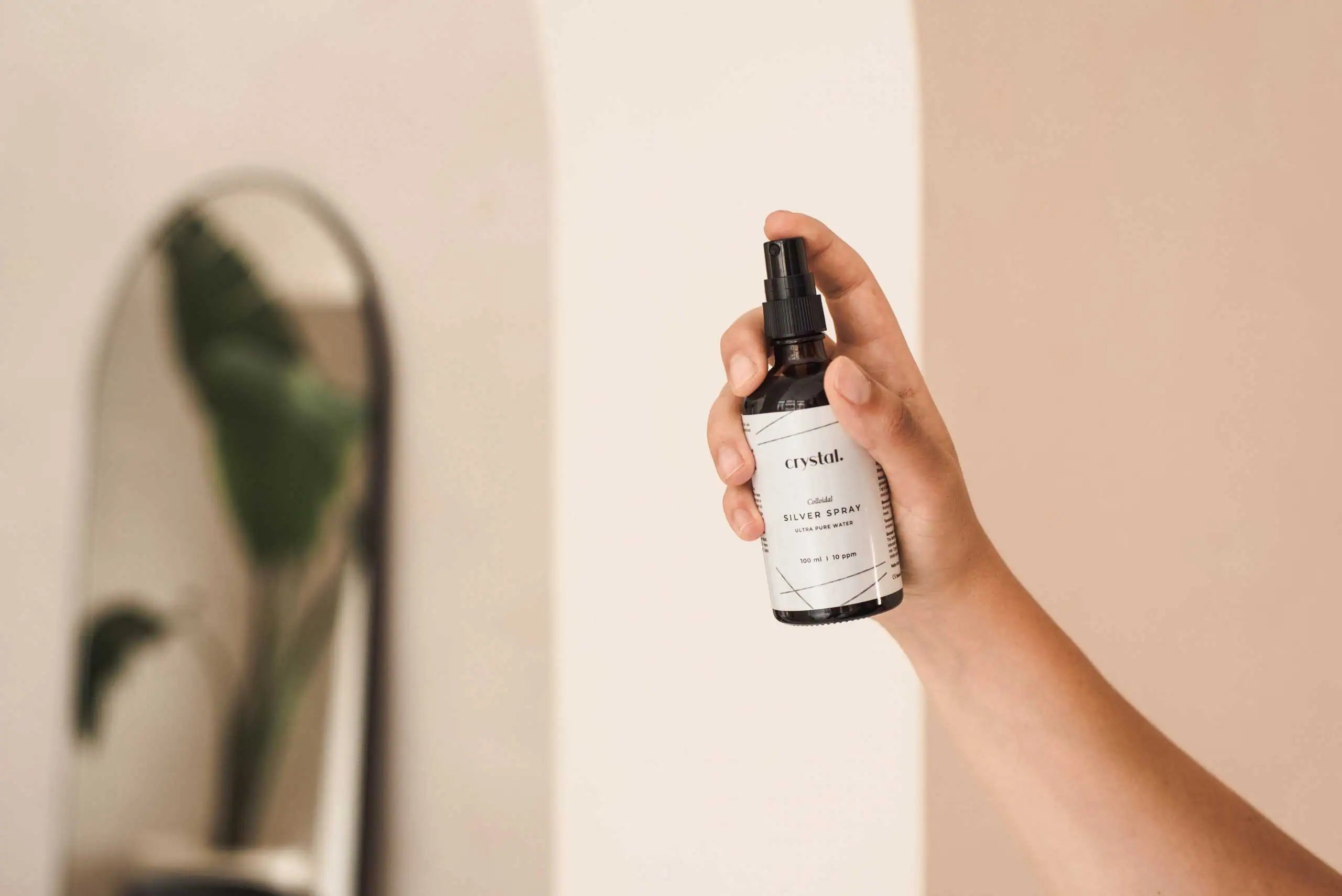
It is a constant balancing act with our skin microbiome. The goal is to effectively treat the external causes of acne without disrupting the skin's important biological functions that support a healthy microbiome. That's where colloidal silver can play a role in the gentle treatment of acne. It acts as a natural preservative and antimicrobial agent. Colloidal silver refers to nanometer-sized silver particles suspended in ultra-pure water and dispersed over a larger surface area. Silver nanoparticles attach to proteins on the bacterial cell wall. By penetrating the wall, they disrupt the bacterium's metabolic process, destroying it. Colloidal silver essentially suffocates bad bacteria and prevents them from reproducing. Therefore, silver microparticles are able to control the growth and spread of bacteria, still one of the main causes of acne.
When applied regularly, colloidal silver can be both preventive and active. Unlike aggressive treatments that can dry out and irritate the skin, colloidal silver targets harmful bacteria. Moreover, colloidal silver can be used in combination with other products. Therefore, it is an easy addition to any skin routine.
Acne and Colloidal Zinc:
Zinc is a well-known trace element that plays a key role in supporting the immune system. Although only needed in minimal amounts, this element is essential for human health. It contributes to processes such as wound healing, fighting infections, and even DNA synthesis. It is present in all organs, tissues, and body secretions. So even though only a small amount is needed, it plays an important role in our health. The best way to get your daily dose of zinc is through food. Zinc-rich foods are oysters, red meat, beans, and nuts. Moreover, the human body cannot store minerals for later use; therefore, our diet is crucial for getting vitamins and minerals.
This trace mineral is often used to shorten the duration of colds and flu. It is ubiquitous in many over-the-counter medicines, but what about zinc for your skin? Zinc is widely known as the beauty supplement, and for good reason. Research shows zinc's benefits for the skin and its effectiveness against acne-causing bacteria. Zinc's anti-inflammatory properties help reduce swelling and redness in acne patients. In addition, studies show that those who used zinc experienced fewer active breakouts than those who did not.
Although most people can get zinc from their diet, a study shows that people with severe acne are more likely to be zinc-deficient. This is usually not a problem in developed countries, but a balanced diet is essential. Avoiding processed and junk foods is the best way to prevent deficiency. Zinc supplements can also be used, as well as topical options such as colloidal zinc. Apply colloidal zinc directly to your face after washing and before other serums or moisturizers.
Less is more: The new minimalist skin routine
Adding colloidal silver and zinc to your skin routine can be a good start, as they work well with other ingredients, so it doesn't take much to adjust your routine. However, the goal is to be mindful of your skin's microbiome, so it may be time to leave those harsh active ingredients behind. Therefore, the first step in cleansing and moisturizing may be to choose gentle products with clean, simplified ingredient lists. This can begin to improve your skin immediately at the source. Sometimes it is hard to realize that many skin complaints, such as redness, dryness, and wrinkles, can be addressed by just your skin regimen. Always consult a doctor or dermatologist for any skin problems, but if you think your skin microbiome is already compromised, then it is best to focus on products with nourishing ingredients such as shea butter, jojoba oil, or squalane oil.
Less is more, and that is especially true when it comes to health.
Colloidal silver and zinc are great additions to any skincare routine. They are easy to use, blend well with other remedies, and consist of simple, pure ingredients. It doesn't take much to modify an existing routine. However, the goal is to be mindful of your skin's microbiome. Therefore, it may be time to leave those aggressive, active ingredients behind. While they can be beneficial, with many studies supporting their effectiveness, they may also be more irritating. Even exfoliating can cause problems for sensitive skin. Alcohol-based toners are used because people like their skin to feel "degreased." However, these can come at a high cost. Instead, it may be worth switching to oily, moisturizing alcohols that keep skin supple. These include cetyl, stearyl, and cetearyl.
First, choose a gentle cleanser and moisturizer with clean, simplified ingredient lists. This can improve skin right at the source. Many symptoms, such as redness and dryness, can be addressed immediately. For skin problems, always consult a doctor or dermatologist. But if the skin microbiome is already compromised, it is best to focus on nourishing ingredients such as shea butter, jojoba oil, or squalane.
Less is more, and that is certainly true when it comes to health. It is easy to get distracted when a popular product or new 10-step skincare routine hits the market. As a result, these complicated products and rituals can expose the skin barrier to hundreds of chemicals. These chemicals put severe pressure on the microbiome, causing imbalances and sensitivities. The goal is to use as few products as possible and simplify the ingredient list. After cleansing the skin, apply colloidal silver and/or zinc topically to the neck and décolletage using a cotton pad. Follow up with any additional vitamins, simple serums, and moisturizers. Because they blend well with others, they can be a simple addition to any routine. Remember that less is more and consistency is key.
Simplify your routine, treat acne with colloidal silver and zinc
The saying, "Beauty is only skin deep," may be outdated as more research highlights the true relationship between the skin microbiome and our health. While acne can be a problem in itself, it is more likely to be a symptom of an unbalanced skin microbiome.
Thus, it is essential to address the cause. Our skin is our immune system's first line of defense and should be treated as such. Simplifying your routine by focusing on pure ingredients with few to no side effects can help your skin regain its most natural biological functions.


