

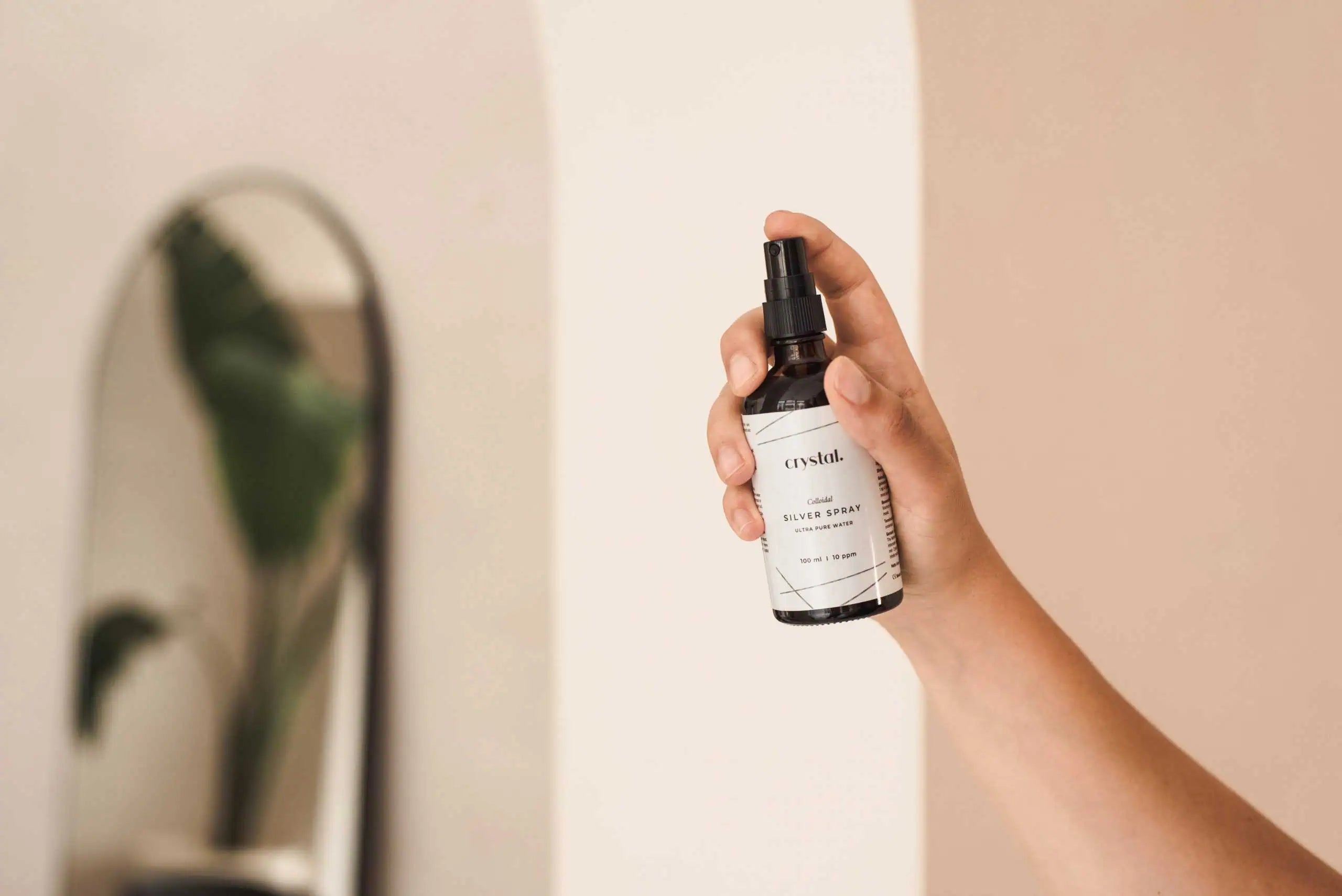
Ionic silver is a common but often mislabeled product that is regularly confused with colloidal silver. Although it is regularly sold under the same name, it is a completely different substance with unique properties and effects. In this article, you will discover exactly what ionic silver is, how it is produced, and in what ways it differs from colloidal silver.
What is ionic silver?
Ionic silver is a solution of silver ions in water, while colloidal silver consists of tiny metallic silver particles suspended in a liquid. This fundamental difference is essential to understanding the action, effectiveness, and safety of both products.
The simple production of ionic silver, which often leads to home manufacturing, contrasts sharply with the complex process required to make true colloidal silver. Silver ions in ionic silver are reactive and readily bind to other molecules in the liquid. Because the ions are positively charged and soluble in water, they behave differently in the body than colloidal silver. When ionic silver comes in contact with stomach acid, it forms silver chloride. This affects its action and absorption in the body. This chemical reaction underscores why it is crucial to properly understand its properties and potential effects.

The difference between ions and particles
Ionic silver, as described earlier, is dissolved silver. A silver ion is a single silver atom missing one electron, which significantly changes the physical properties of silver. The main difference between ions and particles is how they react when the water in which they are dissolved evaporates. When ionic silver dries, the silver ions form a silver oxide compound with minimal antibacterial activity. Silver particles, on the other hand, retain their structure and remain effective. This process is similar to drying salt water and water with glitter suspended in it. In salt water, salt crystals remain after evaporation, whereas in glitter water, the particles remain intact and visible.
The effectiveness of ionic silver
Ionic silver differs from colloidal silver in both stability and effectiveness. On the skin, this difference is not immediately noticeable, but once ionic silver comes into contact with chloride ions, it forms silver chloride. A common misconception is that after this binding, the silver solution still has the same effectiveness as colloidal silver. In reality, this process significantly reduces the effectiveness.

Safety and use
The safety of ionic silver is a concern, especially when consumed in high concentrations. Although silver in small amounts may have certain antibacterial properties, overdosing can lead to serious side effects, such as argyria, a permanent blue-gray discoloration of the skin. The body cannot process the product properly when taken in large quantities, mainly because it is not soluble in the stomach AND can accumulate in tissues. When silver ions accumulate in the body, they can become toxic and harm the kidneys and other organs. Therefore, it is important to exercise caution when using silver in any form. In addition, it is essential to recognize the possible risks of overuse, such as self-manufacturing ionic silver at home with high concentrations. It is recommended that when using colloidal or ionic silver for therapeutic purposes, a physician be consulted in advance.
The production differences
Many products sold as colloidal silver are actually ionic silver. This is because producing ionic silver is simple and inexpensive. With just a 9-volt battery and silver wire, it is easy to produce. In contrast, producing true colloidal silver, which consists of a high concentration of silver particles, requires a complex and precise process. Want to know if you bought ionic silver after all? There are several ways to test for it:
- Color test: Ionic silver is clear and completely colorless because silver ions do not reflect light when dissolved in water.
- Salt test: You can test the product by adding table salt to the liquid. With ionic silver, a white cloud will then form in the liquid.
- Light sensitivity: Ionic silver is photosensitive and reacts poorly to ultraviolet (UV) or visible light.
- Packaging: Is the silver solution sold in UV-protective Miron glass bottles? If so, chances are it is ionic silver, which is highly unstable and requires protection from light.
- Shelf life: Ionic silver has a short shelf life due to its instability. In contrast, real colloidal silver is extremely stable. Crystal Colloidals even have samples that remain perfectly intact after 15 years.
Conclusion
The comparison between ionic and colloidal silver reveals major differences in production, properties, and effectiveness. This means that the claimed benefits of ionic silver as a supplement are largely false. By staying well-informed about the differences between the products, you, as a consumer, can make better choices and avoid misleading product claims. Critical thinking and proper research are essential when purchasing silver products.


